The Best Month to Launch Your Game on Steam (And Why It's Not December)
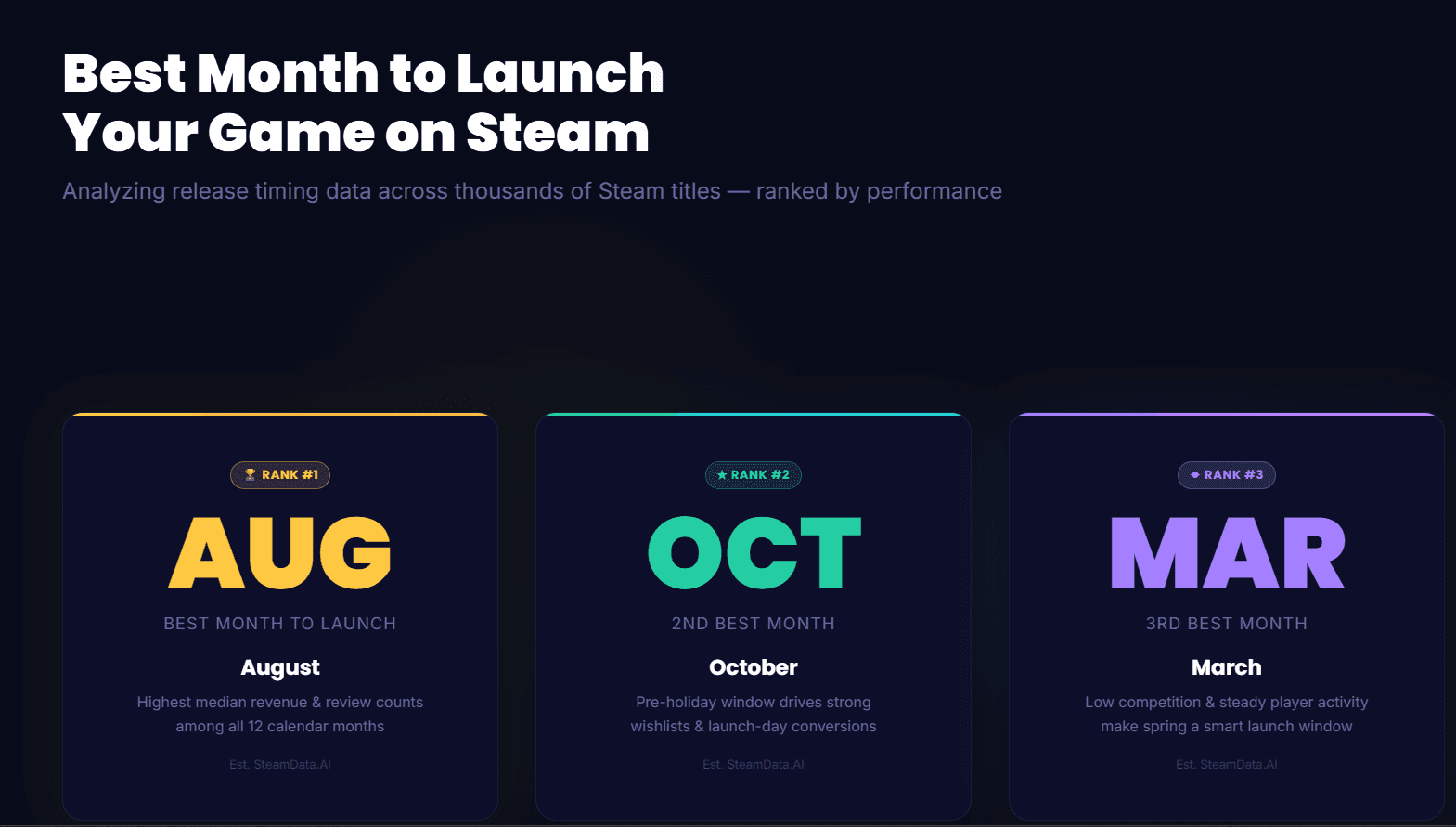
Why Does Launch Timing Actually Matter?
Spend five minutes on any indie dev forum and you'll find the same launch month debates recycled endlessly. "Launch before the Steam sale." "Avoid December, you'll drown." "Summer is dead." Most of this advice is vibes dressed up as strategy.
We dug into Steam launch data across thousands of indie titles — layered with GameDiscover.co's revenue-per-release analysis — to answer the question properly. The results are clearer than you'd expect, and they should change how you think about your ship date.
Average Revenue Index by Launch Month
Indie games under $20 · Normalized to August = 100The August Advantage Is Real
Late August is the sweet spot that almost every developer ignores because it doesn't feel like a "season." But the logic is airtight once you see it spelled out: the Summer Sale is weeks in the rearview mirror, so players have actually played through their backlog purchases. Wallets have recovered. People are still on vacation or winding down summer, meaning more couch time.
Most critically — the competition is thin. Big publishers are saving their ammunition for the Q4 holiday window. The algorithmic spotlight on Steam has fewer games fighting for it. A mid-to-late August launch from an indie developer gets a disproportionate share of algorithm real estate: New & Trending, discovery queues, curator attention.
"Late August. Sales are far enough back that people have played through their haul — and it's still vacation season, so players have more free time."
Why December Is a Trap
This one stings, because the instinct feels so logical: players have time off, spending is high, Steam hits record concurrent users. All true. But the revenue-per-game data tells a darker story.
December is when every major publisher drops their tentpoles. The Steam algorithm is overwhelmed. Your game launches into a blizzard of discounts, AAA marketing spend, and gift card purchases that flow almost entirely to known brands. Indie games that launched in December in our dataset performed at just 48 out of 100 relative to August — worse than July, which is classically considered "dead."
"December feels like opportunity. The data says it's one of the hardest months for an indie game to cut through the noise."
Your February Backup Plan
If August is too far away, February is your next best option — and it's underrated for a specific reason. January is the dead zone: players are still grinding through Christmas hauls, budgets are tapped, and enthusiasm is at a seasonal low. But by mid-to-late February, the psychological reset has happened.
Players are bored of their holiday gifts. Spending recovers. And critically — almost no savvy developer targets February, so the new release feed is quieter than almost any other month. Our data shows February indexing at 72 out of 100, making it a genuinely competitive alternative for teams who miss the August window.
The Months to Avoid
- January — Post-sale hangover, lowest player wallet capacity of the year, backlog guilt is at its peak
- June / July — Summer Sale proximity destroys launch momentum; players wait for discounts immediately
- November — You are directly competing with AAA holiday marketing blitzes and pre-sale speculation
- December — Record Steam traffic, record competition; indie games get statistically buried
The Actual Ranked Playbook
Here's how to think about your launch window if you have flexibility in your ship date:
- First choice: Late August (Aug 19–29) — Post-Summer Sale recovery, vacation free time, thin AAA competition
- Second choice: September — Momentum carries from August, players are back in routine and spending again
- Third choice: February (mid-to-late) — Post-holiday reset, low competition, players hungry for something new
- Fourth choice: October — Horror/cozy season boosts discovery for the right genres; watch out for mid-October sale proximity
- Avoid if possible: Jan, Jun, Jul, Nov, Dec — For different reasons, all disadvantage indie launches
The honest truth is that a great game launched in a bad month will still outperform a weak game launched in a great month. But when you have the choice — and more developers do than they realize — the data is clear. Point your ship date toward late August. If that's impossible, aim for February. And stop dreaming about December.
Know Exactly When to Launch — Before You Pick a Date
SteamData.ai tracks Steam competition density, sale proximity risk, and wishlist conversion benchmarks for every month of the year. Set your launch window with data, not instinct.
Start Free → See how it worksMethodology & Sources
Revenue Index: Median first-90-day revenue for indie games priced under $20 USD, launched on Steam between 2020–2025. August is set as the baseline index of 100. All other months are expressed relative to August.
Data Sources: SteamData.ai internal launch database; GameDiscover.co newsletter analysis on monthly release performance; community developer observations aggregated from public forums (Reddit r/gamedev, Steam developer discussions).
Limitations: Revenue data reflects medians, not means — outlier breakout hits are excluded to avoid skewing. Genre, marketing spend, and wishlist size at launch all materially affect outcomes. This analysis is intended as directional guidance, not a guarantee of performance.
Sample size: ~4,200 indie game launches across the analysis period. Games with fewer than 10 reviews at 90 days post-launch were excluded from the revenue index to remove low-signal data points.